With those takeaways as a map, the next step is defining the term properly, since “qualified” means different things to different teams until you pin it down.
What is lead qualification?

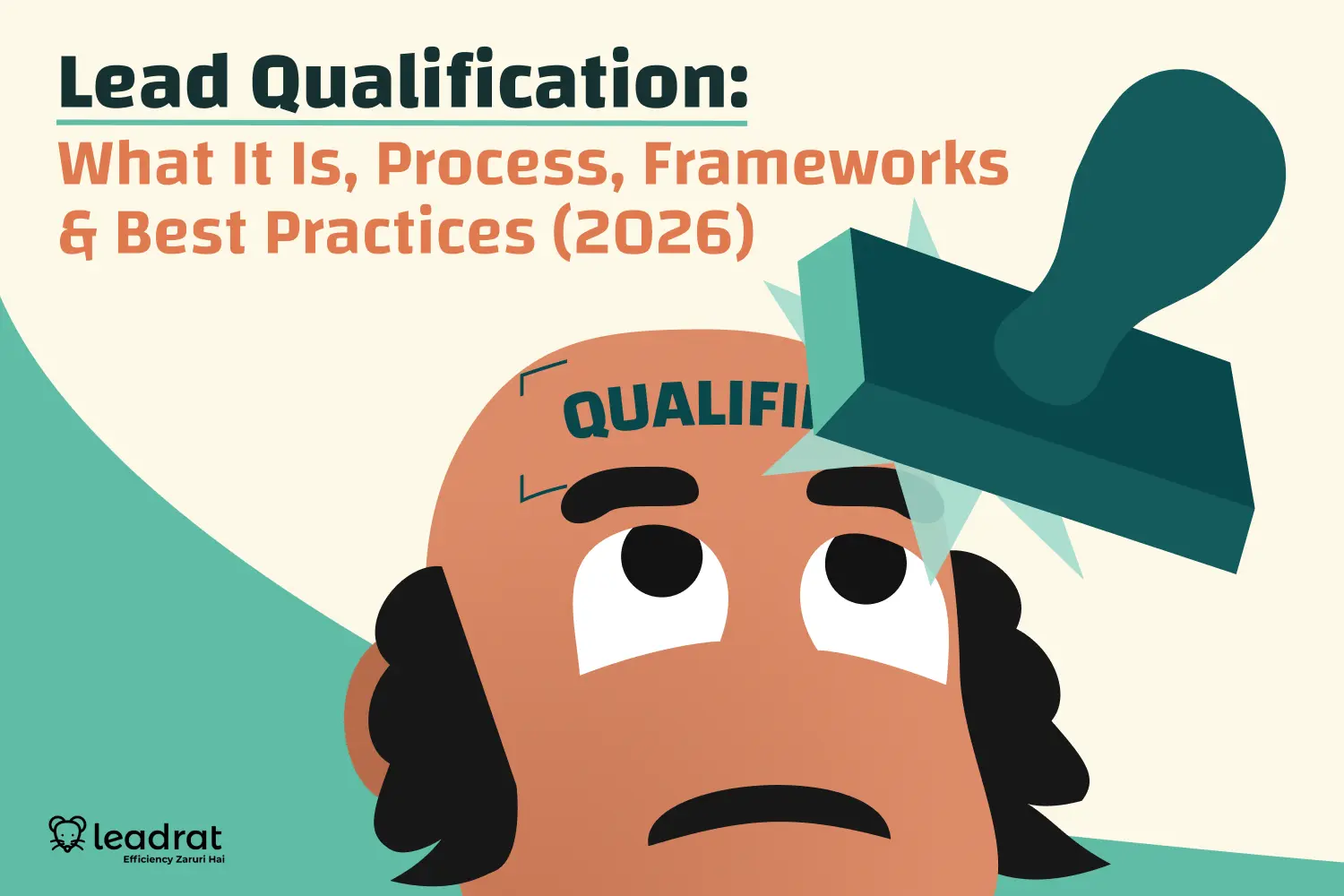
Lead qualification is the process of determining whether a prospect can afford your product and genuinely needs it. Those two conditions decide almost everything. If either is missing, the lead isn’t qualified, regardless of how engaged or friendly the conversation feels.
Basically, it is the process of determining whether a prospect has the budget, authority, need, and timeline to buy, so sales teams spend time only on leads likely to convert.
This isn’t sales’ job alone. Marketing usually filters the first layer through campaigns and lead scoring, and sales confirms fit and authority before investing real time. When that handoff is unclear, qualified leads get lost and unqualified ones get chased.
Also read: What is a Lead?
Types of qualified leads
- Marketing Qualified Lead (MQL): Has engaged with content or campaigns. Interested, but not yet ready for a sales conversation.
- Sales Qualified Lead (SQL): Vetted for fit and readiness. Ready for direct outreach.
- Product Qualified Lead (PQL): Has used a free trial or freemium product and shown intent through actual behavior, not just stated interest.
Also read: 36 ways real estate agents in India actually get leads, for where these first-touch leads typically come from.
Understanding the importance of lead qualification

Every hour a rep spends on an unqualified lead is an hour taken directly from a lead who was ready to buy. That’s the real cost, not wasted effort, but opportunity lost elsewhere.
This is exactly the kind of leak we cover in our guide on why real estate agents struggle to convert leads.
Qualification changes three things:
- Forecast accuracy. When “qualified” has a defined meaning, pipeline numbers stop being aspirational.
- Cycle speed. Reps stop re-litigating fit halfway through a deal because it was established upfront.
- Sales-marketing trust. Shared criteria end the recurring argument over who owns “bad leads.”
In real estate, this plays out in a very physical way. An agent who confirms budget, location fit, and purchase timeline before booking a site visit spends less time driving prospects between properties and more time closing buyers who were serious from the first call.
Knowing why qualification matters is one thing. Knowing how to actually run it is another. That’s where a framework earns its place.
Also read: What is Lead Routing?
Lead qualification framework

No single framework fits every sales motion. The right one depends on deal complexity and how well the buyer already understands their own needs.
1. BANT: Budget, Authority, Need, Timeline
The most direct framework, built for transactional sales or buyers who already know what they want.
- Budget: Can they afford it?
- Authority: Are you talking to the person who decides?
- Need: Does your product solve their actual problem?
- Timeline: When are they planning to buy?
Real estate example: A buyer asking about a ₹1.5 crore apartment, with financing pre-approved and a 3-month move-in deadline, clears all four. That lead gets called today, not next week.
2. CHAMP: Challenges, Authority, Money, Prioritization
CHAMP opens with the buyer’s problem instead of your questions. It suits warmer leads who respond better to a consultative approach than an interrogation.
- Challenges: What isn’t working for them right now?
- Authority: Who else has to sign off on this?
- Money: Is there budget room?
- Prioritization: Where does solving this sit against everything else competing for their attention?
3. MEDDICC: Metrics, Economic buyer, Decision criteria, Decision process,Identifypain, Champion, Competition
Built for long, multi-stakeholder deals: enterprise software, commercial real estate, anything with a procurement process attached.
- Metrics: What measurable outcome are they chasing?
- Economic buyer: Who owns the budget?
- Decision criteria: What determines which vendor wins?
- Decision process: What approvals stand between now and signature?
- Identify pain: What’s actually driving this purchase?
- Champion: Who inside the account is advocating for you when you’re not in the room?
- Competition: Who else is on their shortlist?
Frameworks give you the questions to ask. A checklist makes sure none of them get skipped when a call gets busy, or a lead seems too promising to slow down for.
Also read: CRM for real estate investors, for how larger, multi-stakeholder property deals get managed.
Lead qualification checklist
| Qualification Check | What to Look For | Why It Matters |
| Real Need | Does the lead have a genuine problem or requirement that your product can solve? Look beyond general interest and identify whether there is a specific need your offering addresses. | A lead without a real need is unlikely to move forward, regardless of how interested they initially appear. |
| Budget / Affordability | Can the lead realistically afford your pricing? For real estate, check whether the stated budget matches the property type, location, and requirement they are asking about. | Qualification becomes more meaningful when budget is aligned with what you can actually offer. |
| Decision-Making Authority | Are you speaking directly with the decision-maker? If not, does the lead have a clear path to the person who can approve the purchase? | Engaging with someone who cannot influence or approve the purchase can slow the sales process significantly. |
| Purchase Timeline | Is there a realistic timeframe for making the purchase? For real estate, determine whether the requirement falls within the next 3–6 months. | A clear timeline helps sales teams prioritize leads that have a realistic chance of converting. |
| Demonstrated Intent | Has the lead shown intent through their actions, such as requesting a demo, attending a site visit, asking for a detailed quote, or sharing specific requirements, rather than simply expressing interest? | Behavior is a stronger indicator of buying intent than a vague enquiry or initial interest. |
| Target-Market Fit | Does the lead fit your ideal customer profile based on factors such as location, industry, company size, property requirement, or buyer profile? | A lead can be interested and still be a poor fit for your product or offering. |
| CRM Documentation | Has every relevant interaction, qualification detail, requirement, and next step been properly logged in the CRM? | Good documentation ensures the next salesperson has the full context and doesn’t have to start the qualification process from zero. |
| Financing Readiness | For real estate leads, is the buyer’s financing already approved or currently in progress? | Financing readiness can directly affect whether a seemingly qualified property buyer can move towards a purchase. |
The principle is simple: every lead should pass through the same qualification checks before earning a follow-up call. A consistent checklist prevents qualification from becoming a matter of personal instinct or individual salesperson judgement.
The checklist keeps individual leads honest. The habits that follow keep the entire qualification process honest over time.
For the full picture of how a CRM supports this end-to-end, also read our complete guide to real estate CRM.
5 best practices of lead qualification

A checklist tells you what to check. These practices are about how to run qualification, so it holds up across a full sales team, not just a single call.
1. Define “qualified” before anyone starts qualifying
If sales and marketing haven’t agreed on criteria in writing, every rep is qualifying on instinct. That’s not a process, it’s a guess with extra steps.
2. Treat lead scoring as a prioritization tool, not a verdict
A high score tells you who to call first. It doesn’t guarantee a close. Teams that treat scoring as the final word stop asking the questions that actually confirm fit.
3. Qualify with intent, not interrogation
Opening a cold conversation with budget and authority questions reads as transactional and kills rapport before it starts. Establish relevance first. Qualify once there’s a reason for the prospect to answer honestly.
4. Automate the repetitive parts through your CRM
A CRM should track engagement, apply scoring rules, and flag leads that cross your qualification threshold without a rep touching a spreadsheet. This matters most where volume is high and speed decides the deal; real estate inbound inquiries being a clear example. This is what we call speed to lead.
5. Audit the framework every quarter, not every year
Buyer behavior moves faster than most qualification criteria to get updated. A framework that worked last year can quietly start filtering out good leads. Check it against actual win and loss of data on a fixed schedule, not when something breaks.
Put these practices together and the payoff isn’t more leads. It’s fewer wasted ones, which is really the whole point.
Qualification is one stage in a much larger workflow – also read our guide to how a CRM optimizes your complete sales process.
Conclusion
Ask yourself one question.
When a new lead lands in your pipeline, does your team know within minutes whether it’s worth pursuing?
If the answer is “it depends who picks it up,” you don’t have a qualification process. You have guesswork with a CRM attached.
Lead qualification isn’t about generating more leads. It’s about deciding, early and consistently, which ones deserve a rep time.
The frameworks differ. BANT, CHAMP, MEDDICC, pick whichever matches your deal size. But the principle doesn’t change confirm fit before you invest effort, use scoring to prioritize rather than replace judgment, and let a CRM carry the repetitive tracking so your team can focus on conversations that move deals.
Teams that treat qualification as infrastructure, not a gut check, close faster and forecast with more confidence. Whether you’re selling software or real estate, that’s the difference between a pipeline that looks full and one that pays out.
That covers the process from end to end. A few questions still come up often enough to answer directly, so here they are in plain terms.