Why Start a Real Estate Business?
Real estate remains one of the world’s fastest-growing industries, fuelled by urbanization, infrastructure development, and rising housing demand. Backed by an economy expected to grow at around 6.5% CAGR over the next five years, India’s real estate sector is projected to contribute nearly 13% of the country’s GDP by 2030, up from about 7% today.
The business offers several advantages:
- Flexible working hours
- Multiple income streams through commissions, rentals, and investments
- Opportunities to scale from a solo agent to a full-service brokerage
- Long-term wealth creation through appreciating assets
None of these means’ success comes easily. The opportunity is real but only if you build your business on the right foundation.
Step 1: Research the Market Before you Start
The biggest mistake new entrepreneurs make isn’t choosing the wrong property it’s entering the wrong market.
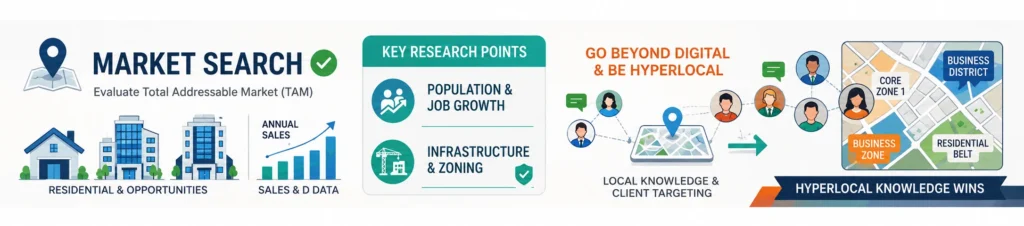
Start by evaluating your Total Addressable Market (TAM), which measures the size of the opportunity in your chosen location and property segment. If you’re entering residential real estate, analyze annual home sales, average prices, and buyer demand. For commercial real estate, study leasing activity, vacancy rates, infrastructure growth, and business expansion.
Then research:
- Population and job growth
- Income levels and buyer affordability
- Housing supply versus demand
- Interest rates and lending trends
- Upcoming infrastructure and zoning changes
- Competitor strengths and service gaps
- Whether your market is already saturated with agents
Go beyond online research. Speak with experienced agents, developers, lenders, and investors. Attend local property expos and networking events to understand market trends firsthand.
Pro Tip: Hyperlocal knowledge wins. Buyers search by neighborhood not by country. The better you understand your local market, the easier it becomes to attract the right clients.
Step 2: Choose a Niche and Target Audience
Trying to serve everyone usually means serving no one well.
Choose a property segment that aligns with your expertise and market demand.
Niche | Best For |
Residential | Homes, apartments, villas, and plots. Faster transactions with higher competition. |
Commercial | Offices, retail spaces, and co-working hubs. Larger deal sizes and longer sales cycles. |
Industrial | Warehouses, logistics parks, and manufacturing facilities. Growing rapidly with e-commerce and infrastructure development. |
Then define your ideal customer. Are you helping first-time buyers, luxury homeowners, NRIs, investors, or businesses? A focused niche helps you build expertise, stronger branding, and better referrals.
Step 3: Obtain the Necessary Licenses and Certifications
Licensing isn’t just paperwork; it’s what allows you to operate legally and build client trust.
Most regions require:
Requirement | What It Involves |
Pre-licensing Education | Mandatory coursework covering property laws, contracts, ethics, and transactions. |
Licensing Exam | Tests your understanding of real estate laws and professional practices. |
Background Verification | Fingerprinting and criminal background checks in most jurisdictions. |
Once licensed, consider joining a recognized professional association. Membership provides industry training, networking opportunities, access to market data, and adherence to a professional code of ethics.
If you’re starting as an agent, you’ll also need to choose a brokerage. Look for strong mentorship, fair commission structures, operational support, lead generation tools, and a culture that aligns with your long-term goals. Your first brokerage often shapes your early career more than you realize.
Read More: Top Real Estate Companies in India
Step 4: Register your Business
Licensing allows you to practice. Business registration allows you to operate professionally.
If you’re starting a real estate business in India, you’ll typically need:
- RERA registration through your state authority
- GST registration (where applicable)
- Shop and Establishment registration
- PAN, business incorporation documents, and regular income tax compliance
Skipping compliance can result in penalties and reduce your credibility with clients, banks, and developers.
Step 5: Create a Business Plan
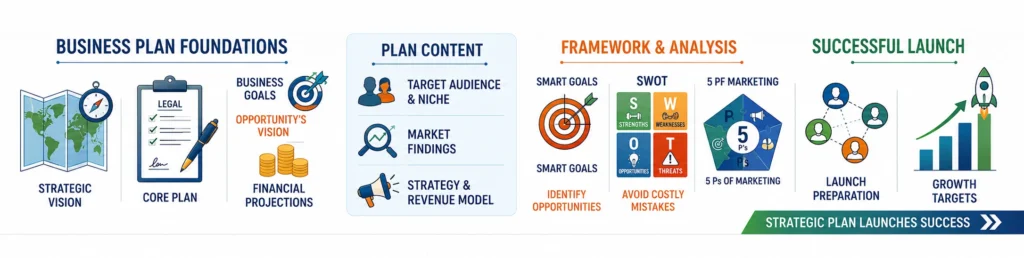
A good business plan doesn’t have to be lengthy; it simply needs to answer the right questions.
Include:
- Your business goals
- Market research findings
- Target audience and niche
- Revenue model and marketing strategy
- Startup costs, operating expenses, and financial projections
Frameworks like SMART Goals, SWOT Analysis, and the 5 Ps of Marketing (Product, Price, Place, Promotion, and People) help you identify opportunities and avoid costly mistakes before you launch.
Step 6: Build a Brand People Remember
Your brand influences whether people remember you or forget you.
Focus on:
- A simple, memorable business name
- A professional logo and visual identity
- A clear Unique Selling Proposition (USP)
- Consistent branding across your website, social media, business cards, and property listings
People don’t just buy properties, they buy confidence. A strong brand helps build it.
Step 7: Secure Funding
Starting a brokerage usually requires less capital than property development, but you’ll still need enough to cover your early expenses.
Common funding options include:
- Personal savings
- Business loans
- Investor or partner funding
- Venture capital for larger projects
In India, a small brokerage may require approximately ₹50,000 to ₹2 lakh for registrations, office setup, technology, and marketing. Always budget an additional 20–30% for unexpected expenses.
Step 8: Build your Professional Network
Real estate is built on relationships.

Start networking early by:
- Attending industry events and trade shows
- Joining real estate associations and local business groups
- Building referral partnerships with builders, contractors, lawyers, interior designers, and mortgage consultants
- Hosting educational workshops or participating in community events
Strong networks often generate your most valuable leads through referrals.
Step 9: Market your Business Consistently
Even the best real estate business won’t grow if people can’t find you.
Build a marketing strategy that includes:
- A fast, mobile-friendly website
- Local SEO targeting neighborhoods and cities
- Helpful blog content answering buyer and seller questions
- Active social media on Instagram, Facebook, and LinkedIn
- Professional photography and virtual property tours
- Email campaigns and structured follow-ups
Think of marketing as a journey from creating awareness to building trust, converting leads, and earning repeat business through referrals.
Also read: 36 ways real estate agents in India actually get leads.
Step 10: Keep Learning and Adapting
Launching your business is only the beginning.
Continue improving by:
- Building a referral program
- Expanding into underserved niches
- Automating lead follow-ups with a CRM
- Monitoring and responding to online reviews
- Staying updated on regulations, technology, and market trends
Well, keep an eye on emerging opportunities such as sustainable buildings, AI-powered property technology, co-living spaces, flexible workspaces, and the rapid growth of Tier-2 and Tier-3 cities.
Step 11: Invest in a Real Estate CRM to Scale Your Business
As your business grows, managing leads through spreadsheets, notebooks, or WhatsApp chats quickly becomes inefficient. Missed follow-ups, delayed responses, and scattered customer information can cost you valuable deals.
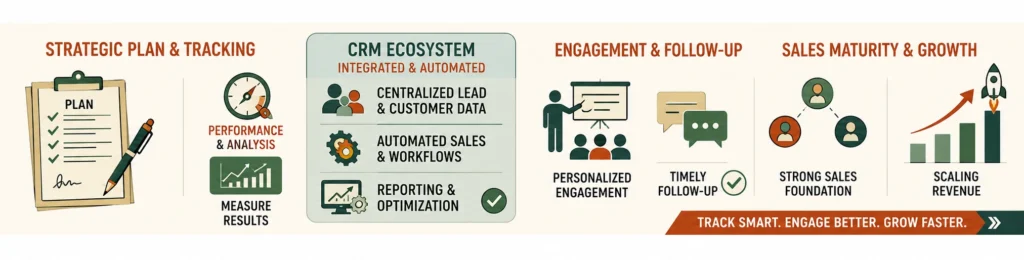
A real estate CRM (Customer Relationship Management) system helps you organize every lead, automate repetitive tasks, and ensure no opportunity slips through the cracks. Instead of spending time tracking conversations manually, you can focus on building relationships and closing deals.
Read our complete guide to real estate CRM.
A good real estate CRM should help you:
- Capture leads automatically from your website, property portals, and social media campaigns
- Assign leads to the right agents instantly
- Automate follow-up reminders, emails, and WhatsApp messages
- Track every interaction from the first inquiry to deal closure
- Monitor sales performance with real-time dashboards and reports
- Manage property inventory and customer information from one place
Read More: Real Estate CRM vs ERP
Final Thoughts
Starting a real estate business takes more than finding your first client. It requires careful planning, market research, legal compliance, a clear niche, consistent branding, and ongoing marketing.
Build the Real Estate fundamentals early, and you’ll be well-positioned to grow a business that earns trust, generates referrals, and succeeds over the long term.
Also read: Top 17 real estate CRMs in India.
Looking for a CRM built specifically for real estate?