
Let me begin with a simple question: what does social media marketing in real estate actually mean to you?
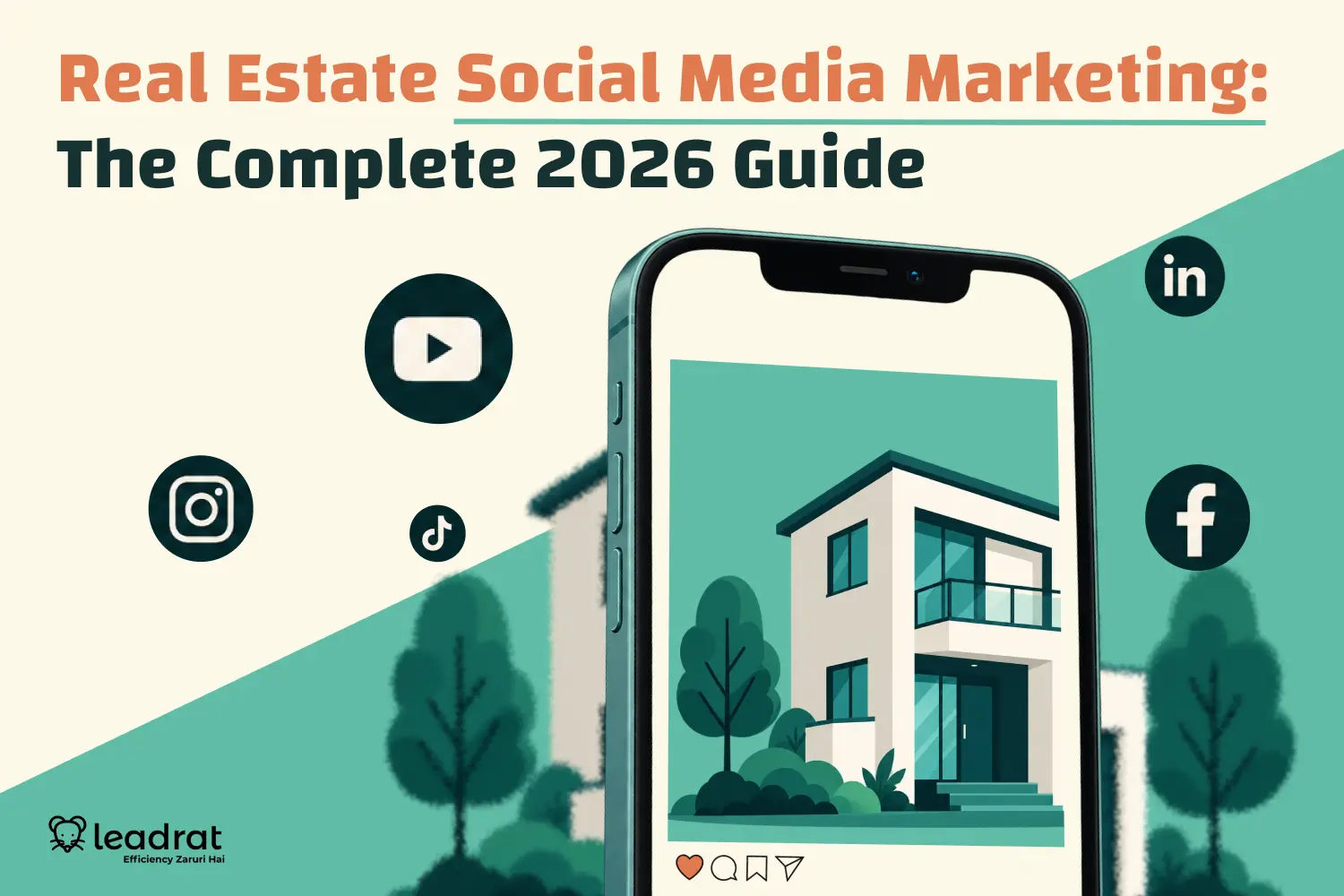
The answer is something we all know on some level, but the details make the difference. It is the steady use of platforms like Instagram, Facebook, TikTok, LinkedIn, and YouTube to move strangers into signed clients.
The audience in real estate splits into two sides: the people buying (clients) and the people selling (agents, brokers, and channel partners). Both sides need a different kind of content, and neither responds well to a generic post.
Real estate social media marketing is not just posting a listing photo. A real strategy has three parts: a clear audience and promise, repeatable content that works, and staying open to trying new things while always giving people an easy way to reach out.
Here’s how each of those three pointers plays out in practice.
Why It Works
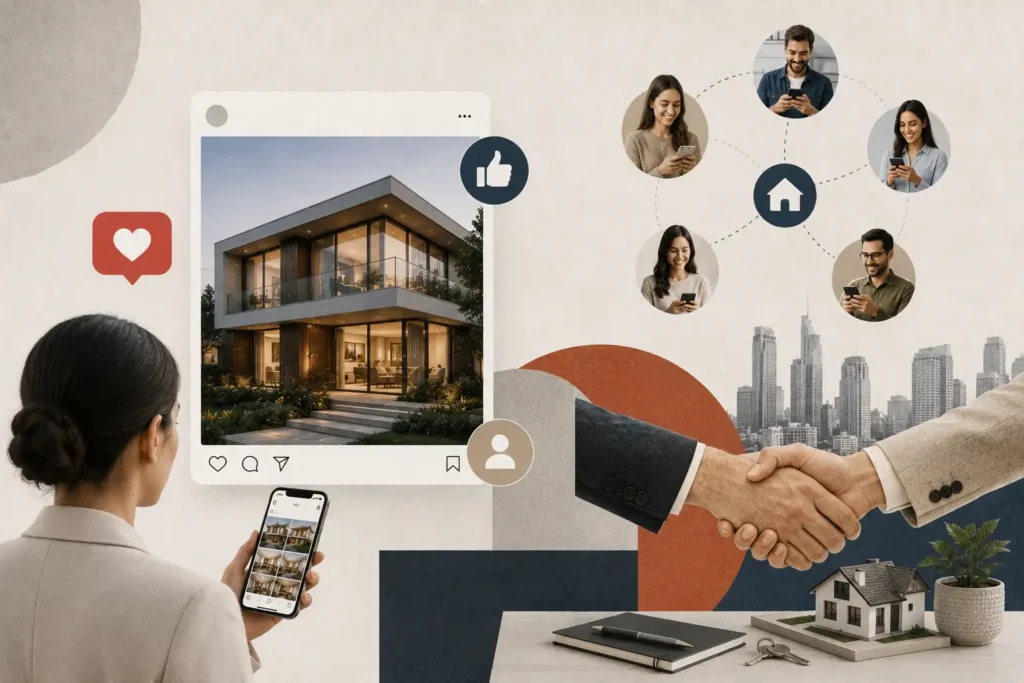
Nearly 4 in 10 active agents now rank social media as the best technology for finding quality leads. That shift makes sense once you look at how people actually search for a home today. But the ratio must be bigger if compared globally.
Most buyers say they found the home they bought online, not on the sidewalk, and younger buyers now often start that search on social media instead of a search engine. For agents, that changes the job.
A feed now does part of what an open house used to do, except it never closes.
Two research studies back this up with real numbers, not just an opinion.
A 2017 study of Turkey’s top real estate study found a direct link between social media activity and web traffic. A 2026 case study of a real estate agency’s TikTok and Instagram use found something deeper: trust, not follower count, is what moves buyers toward a sale. Both prove social media works, but only when you run it like a system, not a habit.
About 43% of home buyers start their search on the internet, and social media is a top destination once they get there. Among Gen Z and Millennial buyers, now the largest buying group, 41% specifically uses social media to learn about real estate. People spend hours a day scrolling, and agents who show up consistently get seen. The ones who don’t simply don’t.
Trust matters just as much as traffic. Buyers rank an agent’s honesty as one of the top reasons they choose one agent over another, and social media, done well, proves that trust before anyone ever picks up the phone.
Pick Two Platforms, Not Five
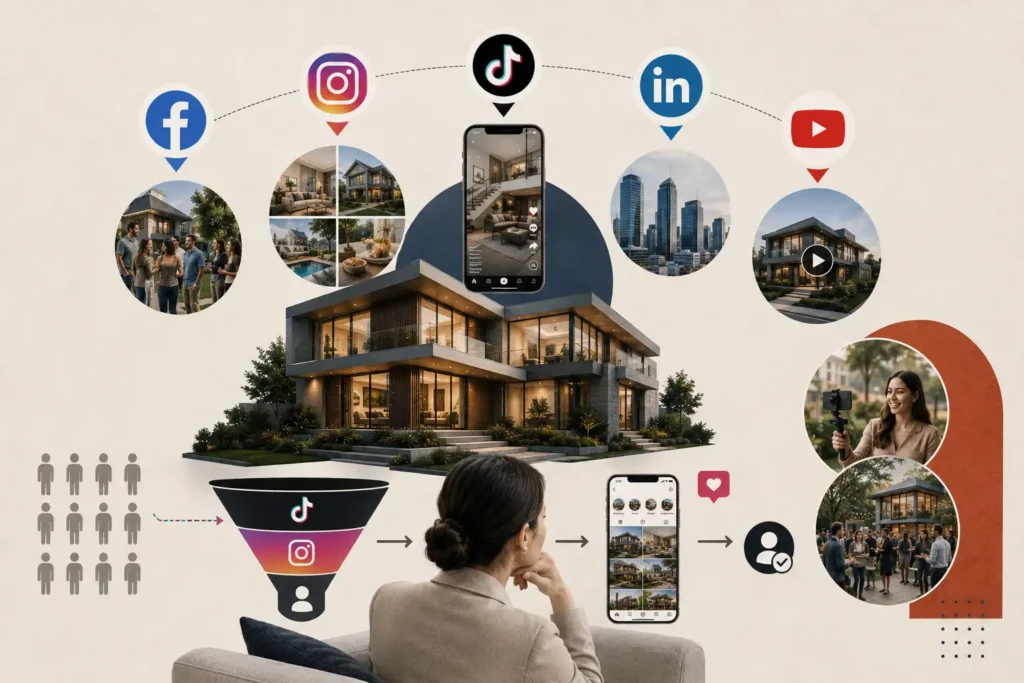
Trying to be everywhere burns agents out fast. Pick two platforms where your buyers already spend time and treat each one differently.


Carousels tend to get the most engagement of any format, pulling a nearly 5% engagement rate for real estate accounts compared with a 3.0% average for Reels. Localize your hashtags too. A citywide tag like #househunting reaches everyone, while a neighborhood-specific tag reaches the buyers who matter.
 TikTok works differently. Its algorithm shows content based on relevance, not who follows you, so a brand-new account can still reach thousands of strangers. That makes it the best pure discovery tool of the group.
TikTok and Instagram work best together, not apart. TikTok pulls in cold, new audiences through short video and algorithmic reach, working as the top of the funnel. Instagram then does something different. It acts as a visual catalog and trust builder, where buyers use feeds, saved posts, and highlights to compare listings and revisit information before ever reaching out. Run alone, either platform only does half the job. Run together, they cover the whole path from stranger to serious lead.
 LinkedIn is smaller than the others but converts well for real estate. It has been shown to be 277% more effective for lead generation than Facebook and X combined, and some agents say it beats every other platform on its own for qualified leads, especially for luxury and commercial deals. Market commentary beats listing photos here every time.
 YouTube rarely gets used by agents, but it keeps working long after you post. A neighborhood guide video can still bring in views a year later.
Two more options round out the mix once your core platforms are running well.
Influencer marketing puts your listings in front of people who don’t already follow you, usually by partnering with a local creator or lifestyle account people already trust, and it works best tied to a specific listing or launch rather than run all the time. Event marketing does the same thing offline.
Besides, an open house, a client appreciation event, or a local sponsorship gives you something to post about and gets people in the room, which a feed alone can’t do. Neither replaces your two core platforms. Both just give them more to work with.
What to Post
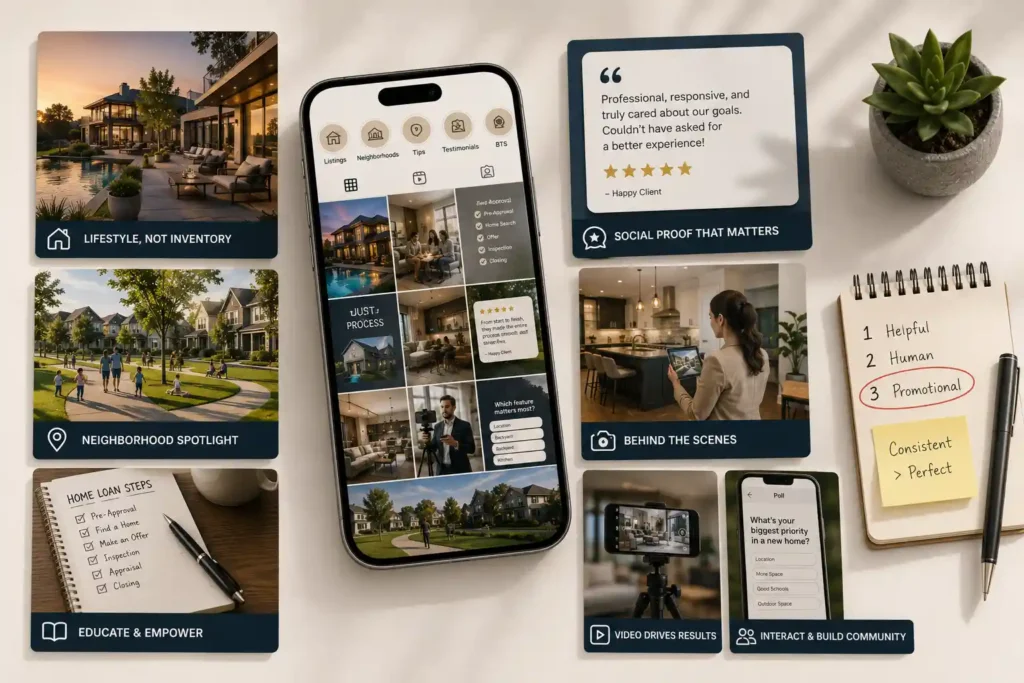
Good content pairs with strong visuals. A pretty photo alone is decoration. A wall of market stats alone is homework. The posts that convert do both.
A workable content mix includes:
- Listings framed as lifestyle, not inventory. Show the life someone could have there, not just square footage.
- Neighbourhood content covering schools, parks, and commute times. Buyers care about the area almost as much as the house itself.
- Education on financing steps, closing timelines, and staging tips. Real estate is confusing to most buyers, and content that removes fear builds trust fast.
- Social proof. Ask every client for a testimonial once the deal closes, get permission, and design it well instead of posting a plain screenshot. Reviews are the single biggest factor in a purchase decision for 90% of U.S. customers, and real estate is no exception.
- Behind-the-scenes content. Most buyers don’t know what an agent actually does, and showing your work justifies your fee before anyone even asks.
- Video, whenever you can manage it. Video marketers get 66% more qualified leads a year than those who skip it, and it doesn’t need a big budget. A phone and decent light do the job.
- Interactive content such as polls, Q&As, and local Facebook groups, which keep people talking to you instead of just scrolling past you. Joining and contributing to local groups also puts you in front of buyers before they’ve even started looking at listings.
Note: Keep one promotional post for every three that is useful or human. Post consistently, more than anything else. With a steady schedule you can actually keep up with; it beats chasing an exact number of posts per week.
Engagement Isn’t All Equal
Not every like means the same thing. Engagement should be read as a gradient rather than a single score. Likes and views show only light interest, while saving, shares, direct messages, and inquiries through WhatsApp or a contact form to show real buying intent. Treat these signals differently, because a post with a thousand likes and zero saves is not doing its job.
Turning Attention into a Conversation
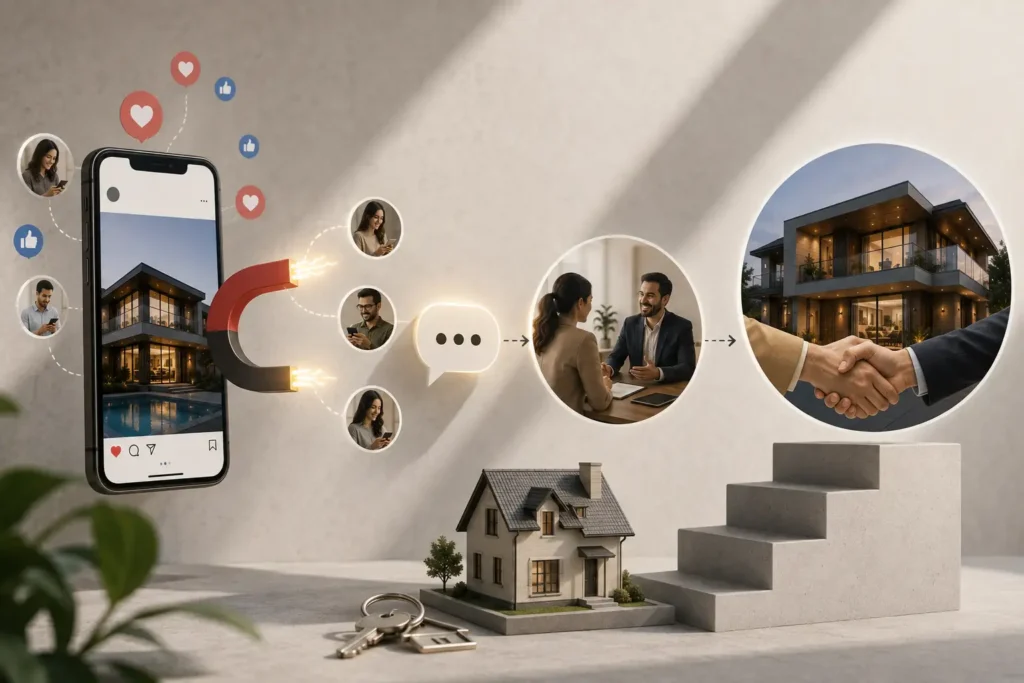
This is the step most agents skip, and it’s why social media sometimes feels like it doesn’t work even with decent engagement. Impressions and likes rarely to turn into revenue on their own. Conversion must be built into the content, not hoped for.
A few things make the difference:
- A specific ask. “DM ‘TOUR’ for the address” beats a vague “link in bio.”
- A fast first reply. A saved DM template or an automated first response gets to a lead in minutes, not hours.
- One clear landing spot. A single bio link with a buyer guide, and a calendar link converts better than scattered information across old posts.
- A hand-off rule set in advance. Decide who calls for warm leads and how fast, before the lead ever arrives.
Here’s the part most agents don’t want to hear: social media rarely closes a deal by itself. People move through a pretty predictable path first:
- They see your content
- They start engaging with it
- They send an inquiry
- You get on a call
- They see the place in person
- Only then does it turn into a closing through more formal channels like a property portal
Social media builds the awareness and trust that gets someone to that first real conversation. It doesn’t replace the conversation itself.
Paid ads can speed this up once you know what’s already working organically:
- Boost a proven post to a wider local radius
- Use built-in lead forms so contact details land with you directly
- Retarget people who watched most of a video but never reached out
- Set a clear goal first: awareness, lead capture, or conversions — then test different visuals, messaging, and calls to action before scaling the budget
One thing worth knowing: housing ads on Meta restrict targeting age, gender, ZIP code, and income, though location radius and interest-based targeting are still fair game.
Read More: Real Estate Marketing Ideas: Ways a CRM Tracks What Works
The Part Almost Everyone Skips: Tracking
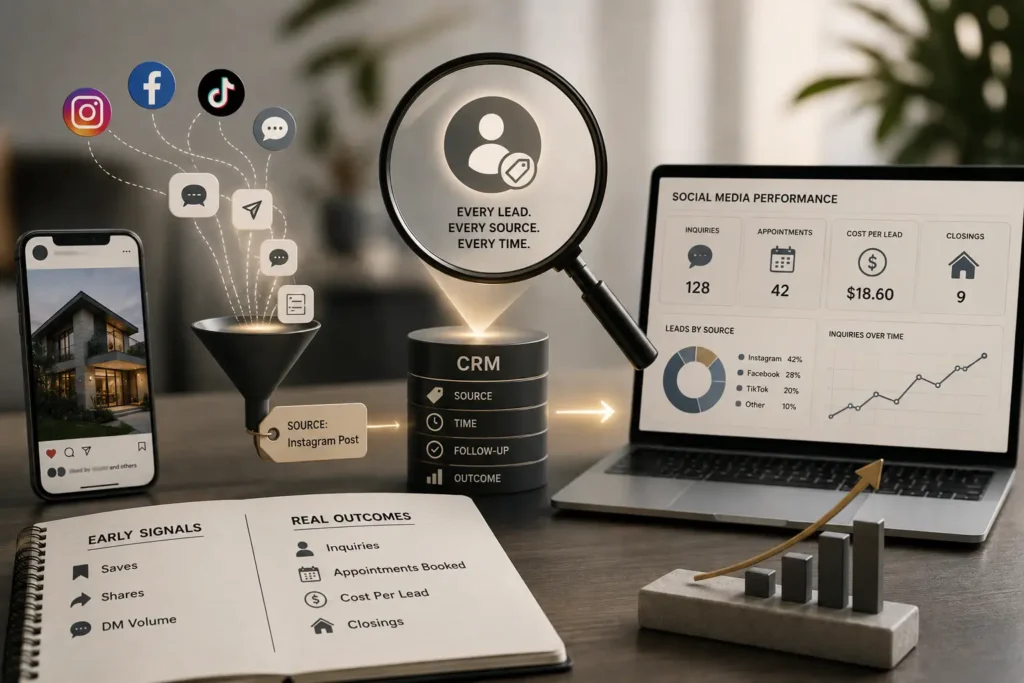
Most agents post consistently but never tag where their leads actually come from. That’s the single biggest gap between agents who treat social media as a business and agents who treat it as a habit.
A few numbers make the case:
- Agents who use a CRM see a 41% increase in lead conversions
- 48% of buyer leads never get a response at all
- Responding within 5 minutes makes you 100 times more likely to reach a lead than waiting 30 minutes
- Waiting even 10 minutes instead of 5 cuts your odds of converting that lead by 5 times
None of that speed or follow-up matters if you can’t see where the lead came from in the first place. Every inquiry, whether it’s a DM, a comment, or a form fill, needs a tag showing its source, logged the moment it arrives. Without that tag, saying social media brings leads is just a feeling, not a number.
If you’re weighing outside help, ask one question before any other: how do leads get tracked back to appointments and closings, not just likes and views?
Track two tiers of numbers:
- Early signals like saves, shares, and DM volume, worth a quick weekly check to see if content is landing
- Real outcomes like inquiries, appointments booked, cost per lead, and closings tied back to a specific platform or post
That second list is the one that actually tells you whether social media is working.
Also read: Real Estate CRM: The Complete Guide for Agents, Brokers, and Builders (2026)
Mistakes That Quietly Undo Good Content
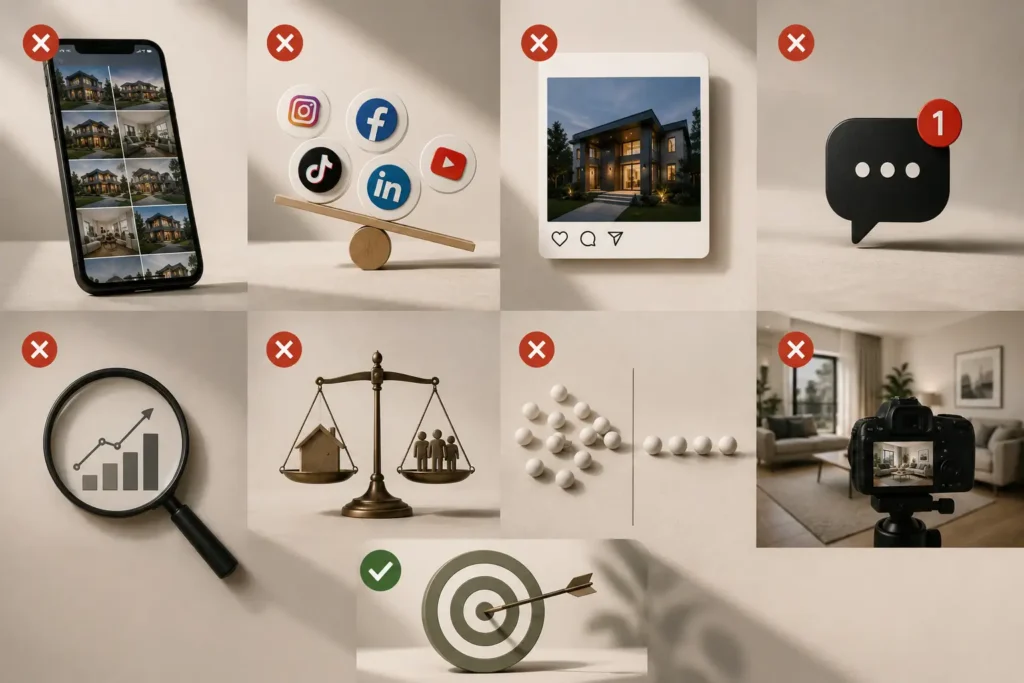
- Feed is all listings. People follow the person first, then inventory.
- Spread too thin. Being mediocre on five platforms loses to being good on two.
- No real call to action. “Beautiful home!” comments don’t book showings.
- DMs go unanswered. The relationships that close deals happen in replies.
- No lead tracking. You can’t improve what you don’t measure.
- Fair housing rules are ignored. Avoid language or targeting that favors or excludes any protected group and follow your MLS rules and any required disclosures.
- Bursty posting. Ten posts in one week followed by silence for three performs worse than a steady weekly rhythm.
- Poor visual quality. Shaky video and bad lighting quietly cost credibility, even when the content idea itself is good.
Bottom Line
None of these needs five platforms or constant reinvention. It needs a clear audience, a few formats you can repeat, a real path from a comment to a conversation, and the discipline to track where your business comes from. Agents who build that system stop treating social media as an extra chore. It has become one of the steadiest, cheapest sources of new business they have.