Every business depends on the leads. However, the nurturing of a lead into a customer can vary.
For instance, some people download your brochure, fill out a contact form, book a demo, or enquire about your product. This means they have shown interest, but interest alone doesn’t guarantee a sale.
Some are actively looking to buy. Others are comparing vendors. Some are researching the future, while a few may never intend to purchase at all.
On the surface, they all look the same. Trust me on this.
But behind the scenes, they’re at completely different stages of the buying journey.
This is where many businesses get it wrong.
They celebrate the number of leads generated but overlook what truly drives revenue: understanding which leads are worth pursuing, which ones need nurturing, and which ones are ready for a sales conversation.
In today’s competitive market, generating leads is easier than ever. But turning those leads into customers is a real challenge.
Well, that starts with understanding one fundamental question:
What is a Lead?
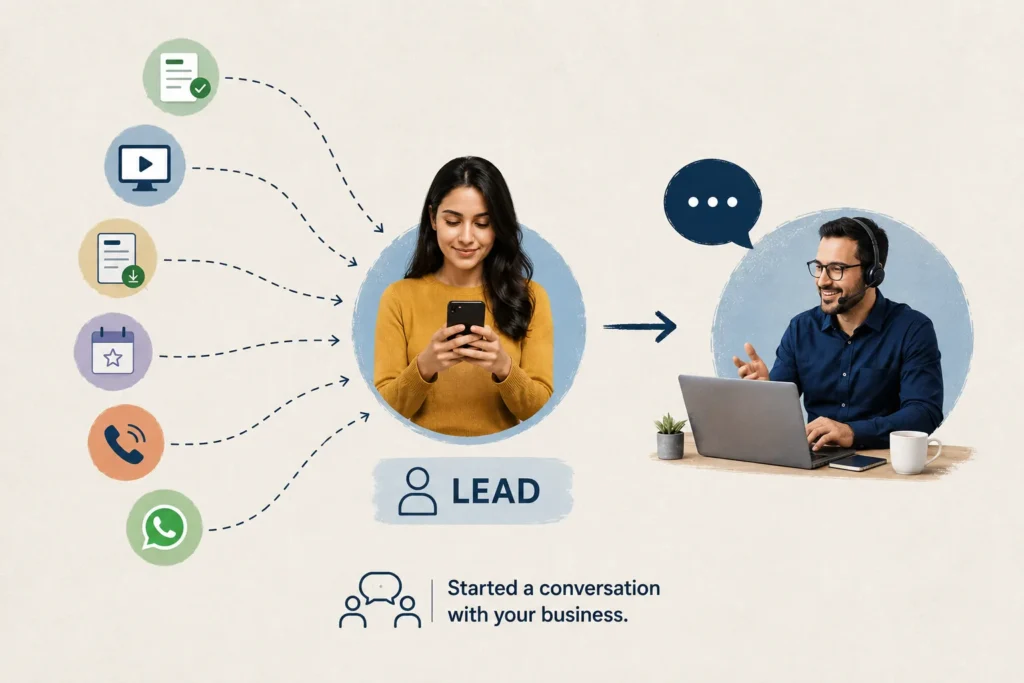
In laymen’s definition, a lead is a person or business that has shown interest in your product or service by interacting with your brand and sharing their contact information.
That interest could be as simple as filling out a form on your website, requesting a demo, downloading a brochure, signing up for a webinar, calling your sales team, or sending you a message on WhatsApp.
At this point, they haven’t become a customer. They’ve simply expressed interest in learning more about what you offer.
Think of it this way: a lead is someone who has started a conversation with your business.
They’ve taken the first step.
What happens next depends on how well your marketing and sales teams understand their needs, answer their questions, and guide them through the buying journey.
It’s also important to remember that not every lead is ready to buy immediately. Some are gathering information before making a decision. Others are comparing vendors or have a genuine need but aren’t planning to purchase for a few more months.
In this phrase, lead qualification becomes pivotal. Instead of treating every enquiry the same, businesses identify which leads are genuinely interested, which need more nurturing, and which are most likely to convert into customers.
What does Lead Qualification look like in practice?
“Volume fills your pipeline. Qualification drives your revenue.“
Marketing can generate hundreds of enquiries in a single campaign, but sales success isn’t measured by the number of leads collected. It’s measured by how many of those enquiries eventually become customers.
That’s why experienced sales teams don’t ask, “How many leads did we generate?” They ask, “Which leads are ready to buy?”
Moving ahead let’s discuss what kind of leads do exist in the business realm.
Also read: our full guide to lead qualification for the frameworks and process in detail.
Types of Leads
Not all leads are at the same stage of the buying journey. Some are just discovering your business, while others are ready to speak with a sales representative or make a purchase.
Understanding the different types of leads helps marketing and sales teams personalise communication, prioritise follow-ups, and improve conversion rates.
Lead Type | What It Means | Example |
Marketing Qualified Lead (MQL) | A lead who has engaged with your marketing efforts but isn’t ready for a sales conversation yet. | A visitor downloads your brochure, attends a webinar, or subscribes to your newsletter. |
Sales Qualified Lead (SQL) | A lead who has been reviewed by the sales team and meets the criteria for direct follow-up. | A buyer requests a site visit, asks for pricing, or schedules a consultation with your sales executive. |
Product Qualified Lead (PQL) | A lead who has experienced your product or service and shown buying intent through usage. This is common in SaaS businesses offering free trials or freemium plans. | A user explores your CRM’s free trial, uses key features regularly, and invites team members before upgrading to a paid plan. |
Service Qualified Lead | An existing customer who has expressed interest in upgrading or purchasing an additional service. | A customer on your basic CRM plan enquires about WhatsApp automation or advanced sales analytics. |
While these categories help identify where a lead is in the sales funnel, sales teams also classify leads based on how likely they are to convert.
Lead Stages based on Buyer’s Intent
Not every lead requires the same level of urgency. Some need immediate attention, while others may need weeks or even months of nurturing.
Lead Stage | Characteristics | Sales Approach |
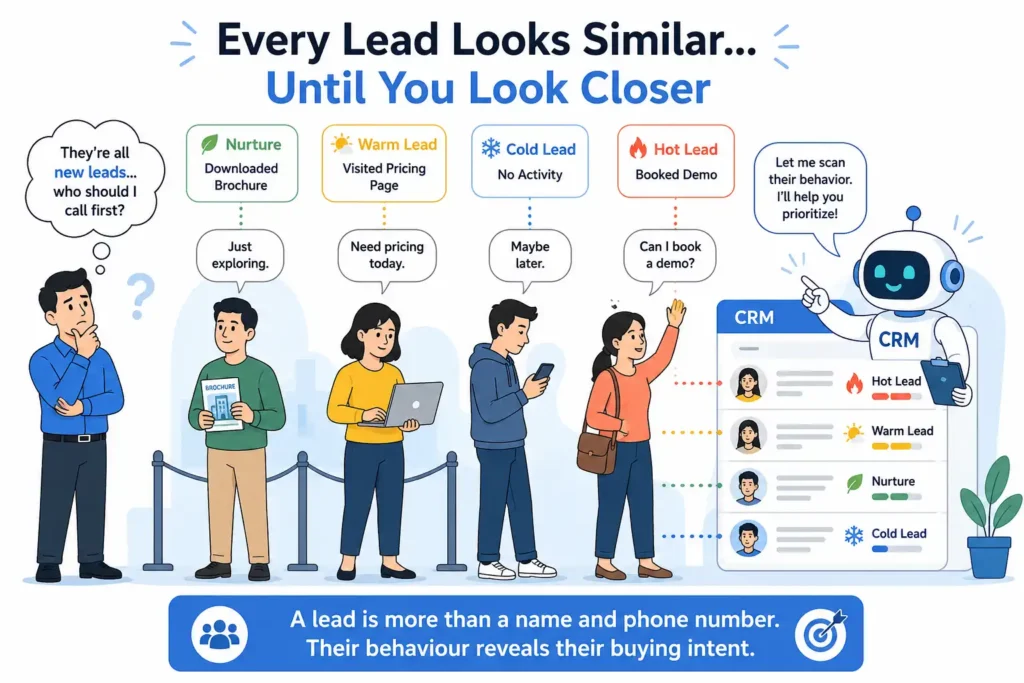
Hot Lead | High purchase intent, actively evaluating options, responds to calls, requests, demos or site visits, and having a clear buying timeline. | Prioritise immediately. Schedule meetings, answer objections, and help them reach a purchase decision. |
Warm Lead | Interested in your offering but still comparing options or gathering information. Engages with your emails, website, or content, but isn’t ready to buy yet. | Continue nurturing with personalised follow-ups, educational content, and regular check-ins. |
Cold Lead | Has shown initial interest but has stopped engaging, isn’t ready to buy, or doesn’t currently have an immediate requirement. | Add them to long-term nurturing campaigns through emails, WhatsApp updates, or remarketing until they become active again. |
Remember, the lead stages aren’t permanent. A cold lead today can become a hot lead tomorrow after the right follow-up, while a hot lead can quickly turn cold if your sales team responds too slowly. That’s why businesses rely on CRM software to continuously track buyer behaviour, update lead status, and ensure every opportunity gets the right attention at the right time.
How does a CRM qualify Lead?
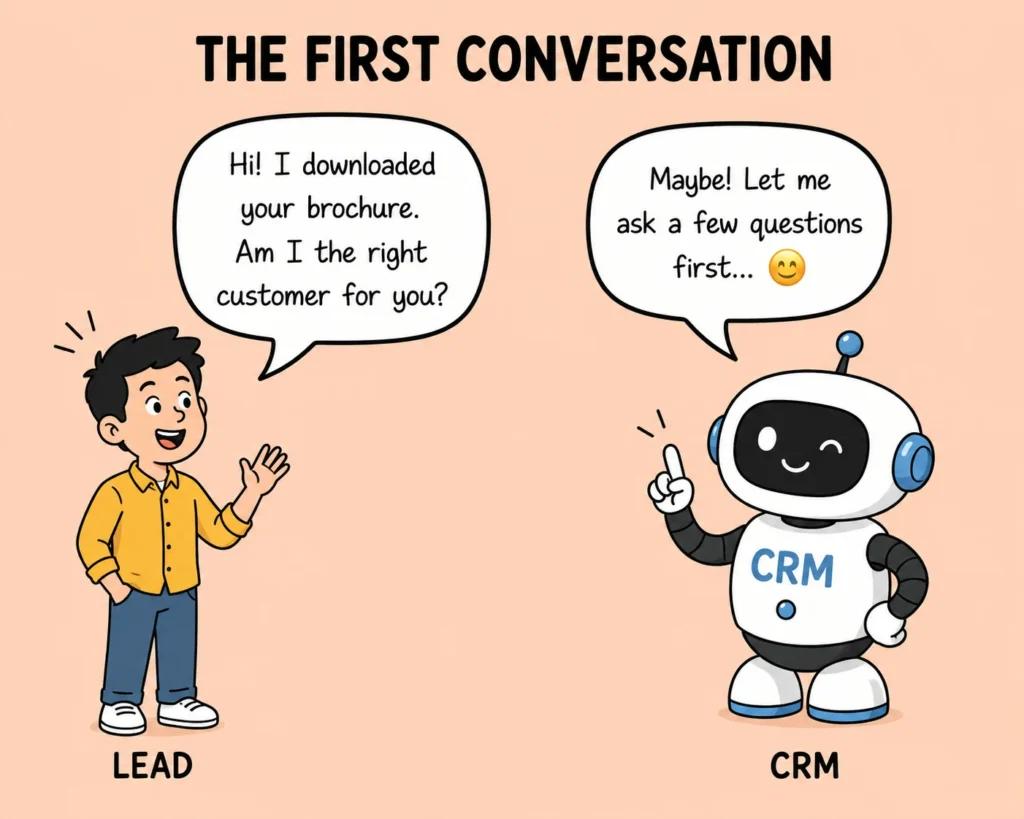 A CRM qualifies leads by observing behaviour, organizing information, automating follow-ups, and helping sales teams act at the right moment.
Also read the behind-the-scenes work covered in our guide to how a CRM optimizes your complete sales process.
Lead qualification isn’t about deciding whether someone is a good or bad lead. It’s about understanding where each buyer is on their journey and giving them the right attention at the right time.
This is exactly where a CRM becomes more than a contact management tool.
Also read: lead routing, for what happens once a lead is qualified.
A modern CRM acts as the intelligence layer between your marketing and sales teams. It captures every enquiry, organizes customer information, tracks buyer behaviour, automates repetitive tasks, and helps sales representatives prioritise the opportunities most likely to convert.
Instead of asking, “Who filled out our form?”, your team can start asking, “Who’s ready for a conversation?”
A CRM Qualifies Leads Through Behaviour, Not Assumptions
Consider two buyers who download the same brochure.
Both enter your CRM as new leads.
Over the next few days, however, their journeys look very different.
Buyer A | Buyer B |
Revisits the pricing page | Never returns to the website |
Opens follow-up emails | Ignores email communication |
Replies on WhatsApp | Doesn’t respond to messages |
Books a site visit | Doesn’t answer calls |
Asks about payment plans | Shows no further engagement |
Although both leads entered your pipeline through the same campaign, their buying intent is very different.
A CRM identifies these behavioral signals automatically, allowing sales teams to prioritise Buyer A while continuing to nurture Buyer B through personalized marketing campaigns.
That’s the difference between lead collection and lead qualification.
The processes involved
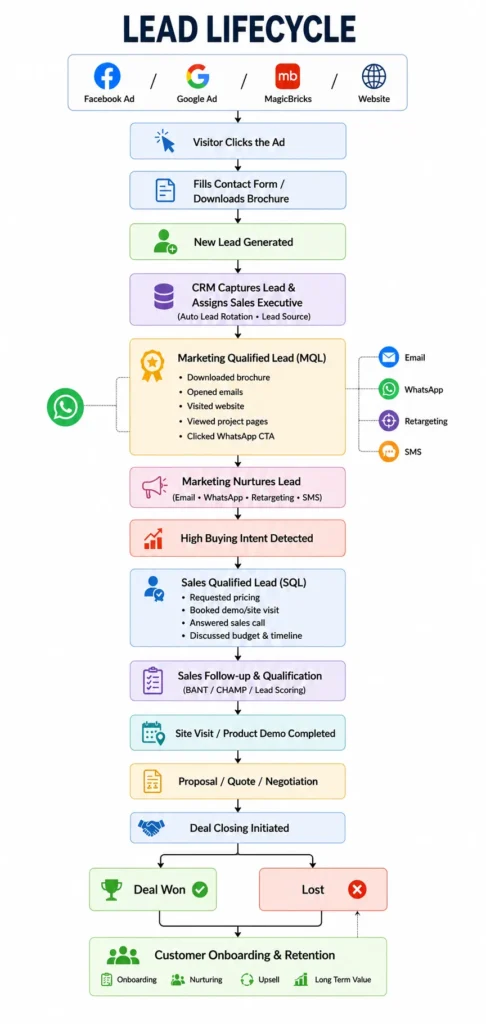
Instead of relying on manual tracking or spreadsheets, a CRM continuously evaluates each lead throughout the buying journey.
CRM Capability | How It Helps Qualify Leads |
Lead Capture | Collects enquiries from Facebook Ads, Google Ads, MagicBricks, 99acres, websites, referrals, and WhatsApp in one place. |
Lead Source Tracking | Identifies which marketing channels generate the highest-quality leads. |
Behaviour Tracking | Monitors brochure downloads, website visits, pricing page views, email opens, and property searches to measure buyer intent. |
Lead Segmentation | Groups lead by budget, project interest, location, buying timeline, or engagement level for personalized nurturing. |
Lead Qualifying | Automatically ranks leads based on engagement, helping sales teams identify high-intent prospects. |
Auto Lead Rotation | Instantly assigns new enquiries to the right sales representative, reducing response time and improving accountability. |
Follow-up Automation | Creates reminders, schedules calls, triggers email campaigns, and sends WhatsApp follow-ups, so no lead is forgotten. |
Sales Dashboard | Gives managers complete visibility into pipeline health, conversion rates, follow-up performance, and team productivity. |
Why it Matters
A CRM doesn’t close deals.
People do. However, as the saying goes:
“The best sales teams don’t work harder. They work smarter by focusing on the right leads.”
What a CRM does is remove the guesswork from lead management.
It gives marketing visibility into which campaigns generate qualified enquiries. It gives sales teams complete context before every conversation. It ensures follow-ups happen on time through reminders and automation. And it gives business leaders a clear view of their sales pipeline, conversion rates, and revenue opportunities.
The result: a faster sales cycle, better customer experiences, and higher conversion rates.
This mirrors what we call speed to lead in real estate – also read our guide to why response time is so critical.
Every lead has potential-but only if it reaches the right salesperson at the right time. See how Leadrat helps you capture, qualify, and manage every lead from a single platform.