Managing multiple property deals, tracking leads, and handling investor portfolios can quickly become overwhelming. One missed follow-up, a disorganized deal pipeline, or a forgotten deadline can mean losing a lucrative opportunity.
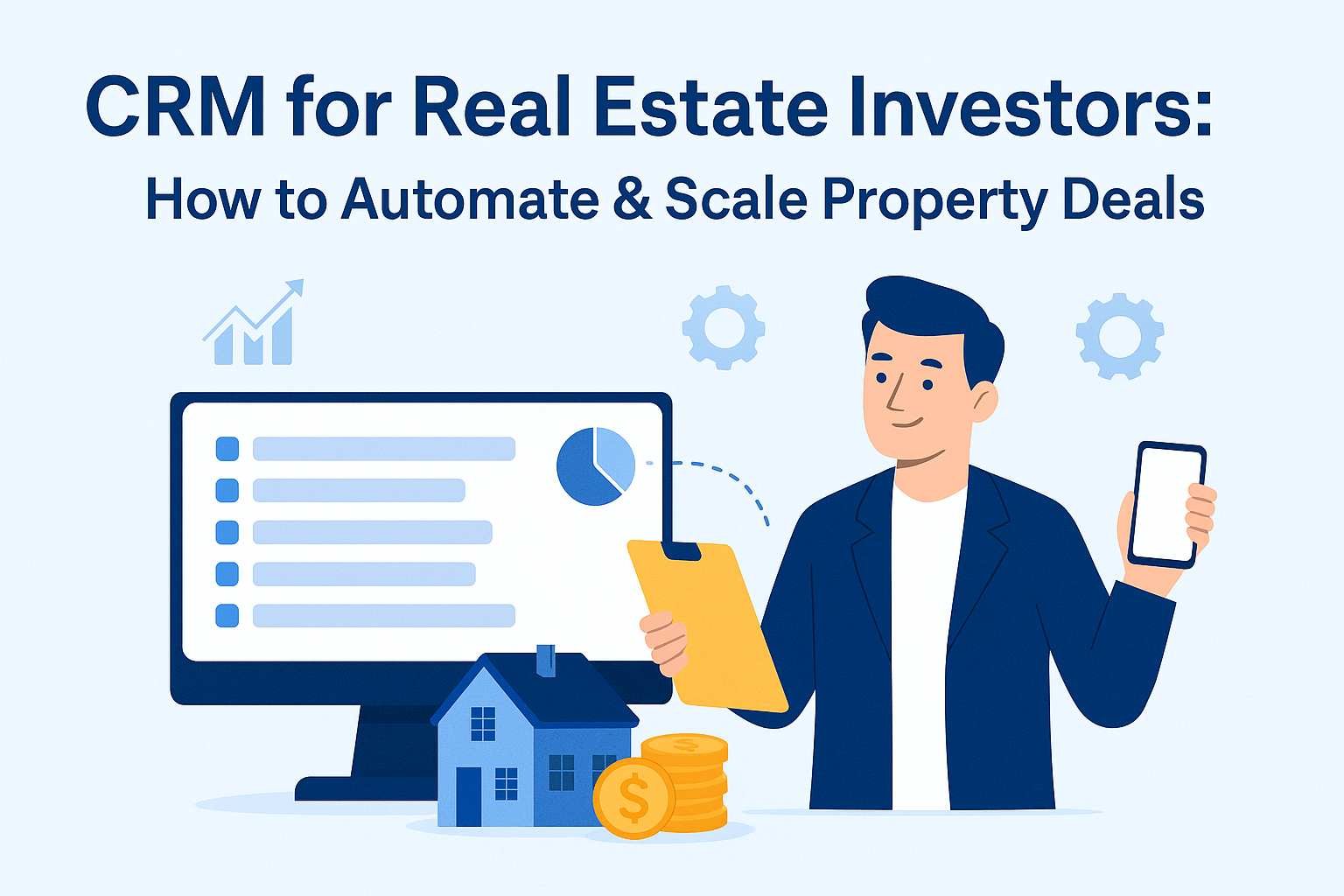
For real estate investors looking toĀ scale their operations and automate repetitive tasks, aĀ CRM for real estate investorsĀ is the game-changing tool they need. It streamlines deal management, centralizes communications, and helps investors make data-driven decisions to close more deals efficiently.
THE REAL ESTATE INVESTOR ADVANTAGEĀ
Real estate professionals using automation and CRM workflows are reporting significantly faster response times, improvedĀ leadĀ management, and up to 40% higher deal closures through smarter follow-ups and automation.Ā
The Challenges of Scaling Real Estate Investments
Managing Multiple Properties & Deals
As investment portfolios grow, so does the complexity of managing multiple properties at different stagesāsome under negotiation, others awaiting financing, and a few in the final closing stage. Without a structured system, tracking each deal manually can lead toĀ costly delays and inefficiencies.
For example, imagine managing:Ā
- 5 properties under negotiation
- 3 awaiting financing approval
- 2 in final closing stages
- 1 awaiting legal documentationĀ
Tracking these manually across spreadsheets, emails, and WhatsApp conversations increases the chances of missed follow-ups, duplicated work, and delayed decisions. A structured CRM pipeline ensures every property moves predictably toward closing.Ā
Data Overload & Disorganization
Investors handle massive amounts of informationāmarket trends, property details, seller and buyer contacts, financial projections, and legal paperwork. Relying on scattered spreadsheets and emails increases the risk of missing out on crucial updates.
Real scenario:
An investor forgets that a property requires title clearance approval withinĀ 48 hours.Ā Because the reminder was buried in email threads, the deal falls through. A CRM prevents this with automated alerts and centralized document tracking.
Inconsistent Follow-Ups & Missed Opportunities
Many investors generate leads through online listings, referrals, and marketing campaigns. However, without a properĀ lead nurturing strategy,Ā potential sellers or buyers may slip through the cracks, causing lost opportunities.
Without automation, many investors follow up once and assume the prospect is not interested.Ā In reality, most property buyers and sellers require multiple touchpoints before making a decision.Ā Automated follow-up sequences ensure no opportunity gets ignored.Ā

Slow Deal Execution
Time kills deals. A lack of streamlined workflows for contract management, financing approvals, and property evaluations can significantly slow down the entire process, reducing profitability.
Closing a single deal can involve 15ā20 manual steps including lender coordination, document collection, inspection scheduling, follow-ups, and approval tracking. CRM automation reduces delays and keeps every stakeholder aligned.Ā
This is where aĀ real estate CRMĀ can make all the difference.
Why Generic CRMs Donāt Work for Real Estate Investors
While generic CRMs work well for standard business operations, they often fall short when applied toĀ real estate investingĀ due to:
- Lack of Real Estate-Specific FeaturesĀ ā No dedicated tools for tracking property deals, financing status, or deal timelines.
- Manual Workload Still ExistsĀ ā Requires extensive customization to adapt to real estate workflows.
- No Built-in Lead & Property ManagementĀ ā Investors need a seamless system to trackĀ sellers, buyers, lenders, and investment partners.
AĀ real estate investor CRMĀ is designed to eliminate these gaps by offering automation, property pipeline tracking, and real-time data insights.
FeatureĀ | Generic CRMĀ | Real Estate CRMĀ |
Property pipeline trackingĀ | Requires customizationĀ | Built-inĀ |
Financing trackingĀ | LimitedĀ | Real estate-specificĀ |
Deal stage managementĀ | Generic sales stagesĀ | Investor workflowsĀ |
Portal integrationsĀ | Manual setupĀ | Auto integrationsĀ |
WhatsApp & SMS automationĀ | LimitedĀ | Native supportĀ |
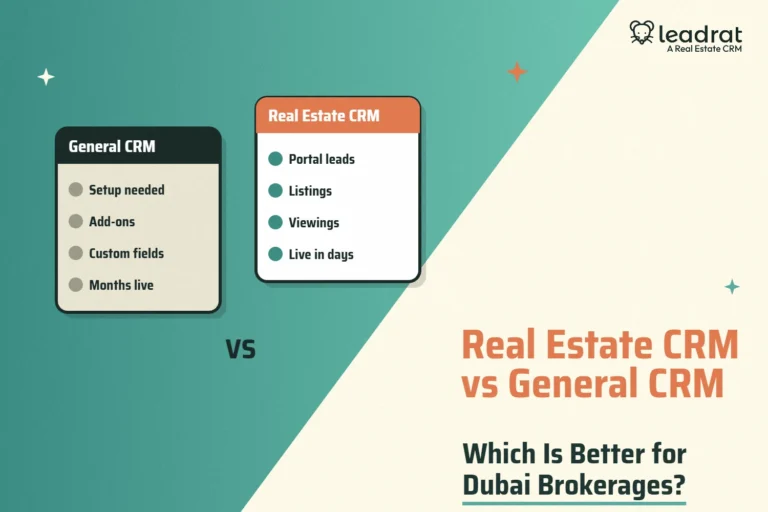
For a fuller breakdown of how real estate-specific platforms compare to generic tools across every feature, see our full comparision of real estate CRM vs generic CRM.Ā Ā
Automating Lead Capture & Management
A real estate CRM centralizes leads fromĀ MagicBricks, 99acres, Housing.com, social media, and referral networks, ensuring investors never lose track of potential opportunities. Leads are automatically categorized and prioritized based on engagement and interest levels.

Hereās how the workflow typically looks:Ā
1. Lead captured from website or property portalĀ
2. Auto-categorization based on budget, location, and property typeĀ
3.Ā LeadĀ scoring identifies high-intent prospectsĀ
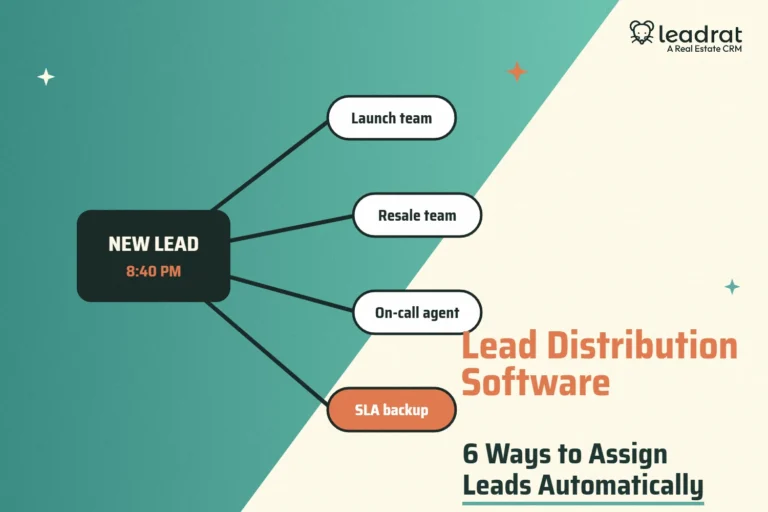
4. Automatic assignment to the right agent or investorĀ
5. Instant alerts sent through email, SMS, or WhatsAppĀ
6. Automated follow-up sequence begins immediatelyĀ
Result: Faster response times, betterĀ leadĀ nurturing, and improved conversion rates.Ā
This is the same principle behind speed to lead– the faster you respond to a new lead, the higher your odds of converting it.
Managing Property Pipelines & Deal Flow
From initial interest to final closing, a CRM helps track each step in the deal process:
- Set automated alerts for follow-ups and due diligence.
- Organize property listings and deal stages.
- Maintain a clear view ofĀ active, pending, and closed deals.
Typical deal pipeline inside a real estate CRM:Ā

At any moment, investors can instantly identify:Ā
– Deals awaiting finance approvalĀ
– Properties ready for closingĀ
– Delayed follow-upsĀ
– Pending documentationĀ
Optimizing Communication & Investor Relations
Investors often juggle multiple conversations with buyers, sellers, lenders, attorneys, and property managers. A CRM centralizes all interactions, preventing miscommunication and ensuring smooth collaboration.
- Automated email & SMS follow-ups
- WhatsApp integration for quick responses
- Centralized document storage for easy access
Common communication problems without a CRM:Ā
– Buyer messages get lost across platformsĀ
– Teams miss important updatesĀ
– Documents are difficult to trackĀ
– Multiple stakeholders work with incomplete informationĀ
With centralized communication tracking, every interaction stays connected to the correct property deal and stakeholder.
Analyzing & Scaling Investments with Data
The best investment decisions come from data-driven insights. A real estate CRM provides:
- Performance tracking for lead sources & deal success rates.
- Custom reports for ROI analysis & cash flow monitoring.
- Market trend insights to help investors spot new opportunities.
CRM analytics can reveal:Ā
– Which property types close fastestĀ
– WhichĀ leadĀ sources generate the best ROIĀ
– Which locations perform bestĀ
– Average deal closing timelinesĀ
– Historical investment trendsĀ
This allows investors to allocate capital more efficiently and scale strategically instead of reactively.Ā
As a portfolio grows large enough to involve heavy financial and project level operations, it’s worth evaluating whether an ERP system belongs alongside your CRM.
See our comparison of real estate ERP vs CRM to decide which to lead with.
Features That Make LeadRat the Best CRM for Real Estate Investors
- Automated Lead Tracking & SegmentationĀ ā Prioritize high-potential leads effortlessly.
- End-to-End Deal Pipeline ManagementĀ ā Track every stage of a property deal from interest to closing.
- Seamless IntegrationsĀ ā Sync with property portals, email, and financial tools.
- Real-Time Alerts & RemindersĀ ā Stay on top of every opportunity.
- Comprehensive Performance AnalyticsĀ ā Make data-driven investment decisions.
Additional capabilities include:Ā
– WhatsApp and SMS automationĀ
– Investor dashboardsĀ
– Team collaboration visibilityĀ
– Centralized communication historyĀ
– Real-time task and approval trackingĀ
Scaling Your Portfolio withĀ LeadratĀ
Growth in real estate becomes exponential when systems and automation are implemented correctly.Ā
LeadratĀ customers commonly report:Ā
– Higher deal handling capacity with the same teamĀ
– Faster closing timelinesĀ
– BetterĀ leadĀ quality and qualificationĀ
– Reduced operational workloadĀ
– Improved ROI through data-driven decisionsĀ
Repeatable systems allow investors to scale operations without proportionally increasing team size or administrative overhead.Ā
š”Ā See This in ActionĀ
Most investorsĀ donātĀ believeĀ CRM automation until they see it live.Ā
ā Book a free 15-minute demo ofĀ LeadratāsĀ deal pipeline and automation tools.Ā
Conclusion
Scaling real estate investments requires more than intuitionāit demands automation, organization, and data-driven decisions. A powerful real estate CRM and lead generation tool ensures investors never miss opportunities, close deals faster, and maximize their returns.
Donāt let inefficiencies slow you downāStart automating your property deals today!
Frequently Asked Questions
What is a CRM for real estate investors?
A CRM for real estate investors helps manageĀ leads, communication, financing, property pipelines, follow-ups, and deal workflows from one centralized platform.Ā
Can real estate investors use generic CRMs?
Yes, but generic CRMs usually require heavy customization and lack investor-specific workflows and automations.Ā
How does CRM automation help investors?
Automation handles follow-ups, reminders,Ā leadĀ assignment, notifications, and communication workflows automatically, reducing delays and missed opportunities.Ā
What integrations are important in a real estate CRM?
MagicBricks, 99acres, Housing.com, Bayut.com, Propsearch.ae, WhatsApp, email systems, and document management tools are among the most important integrations.Ā