

INDEX:
| CRM software statistical facts |
| What is Next-Generation CRM? |
| Next-Generation CRM and Real estate future |
| Importance of Next Generation CRM software in the real estate sector |
| Conclusion |
Ever since CRM (Customer Relationship Management) software arrived, businesses have worked hard to attract leads and turn prospects into clients. In the last 25 years, the CRM business has significantly transformed and brought revolution among diversified industries. As the years elapsed, primary CRM software versions evolved and grew rapidly.
CRM software statistical facts:
Let’s have a quick look at a few facts about the CRM software market statistics:
- The CRM software market has become the biggest by the year 2021 amid Covid-19 across the globe.
- Analysts expect the CRM market to reach approx $41 billion of revenue by the end of 2027.
- The year 2020 saw the highest increase in the use of CRM software and solutions on mobile phones.
- Data shows that 50% of employees across industries became more productive with mobile CRM software.
- In 2008, barely 12% of organizations used cloud-based CRM. By 2020 and 2021, however, that figure had grown by 87%.
(Info extracted: as per superoffice.com and www.globenewswire.com)

2008

2021
What is Next-Generation CRM?
Next-Generation CRM is the well-extended and evolved version of traditional CRM. Traditional CRM focused on client and lead relationships. Next-generation CRM, however, is fully cloud-based and focuses on;
- customer knowledge and expectations,
- High-value adding services, and
- capability to offer personalized and tailored offers.
In simple words, next-generation CRM understands what long-term survival takes. So companies must pay attention to customer satisfaction.
Next-Generation CRM and Real estate future
Competition is fierce, the market moves fast and customers are well informed. As a result, real estate businesses face big hurdles in their demanding industry. This obstacle requires a solution that has to be flexible and adaptable enough to answer the customer’s expectations. Next-generation CRM is the answer to such milestones.
In real estate, the customer is king. So every successful deal has always depended on customer relationships. However, traditional CRM was transaction-oriented and judged clients by prospects, conversions and revenue. Today, customer relationships look different. All-embracing exposure to the web, especially social media has cheered customers and buyers to urg for elaborative information within their restricted expectations and time limit. On top of that, fierce competition makes it tricky to win leads, convince buyers and keep them loyal.
The real estate industry is growing fast in all directions and thus it needs strong and updated IT support, mainly innovative next-generation real estate CRM that uses the company’s data to deliver additional value to customers resulting in more conversions and higher revenue.
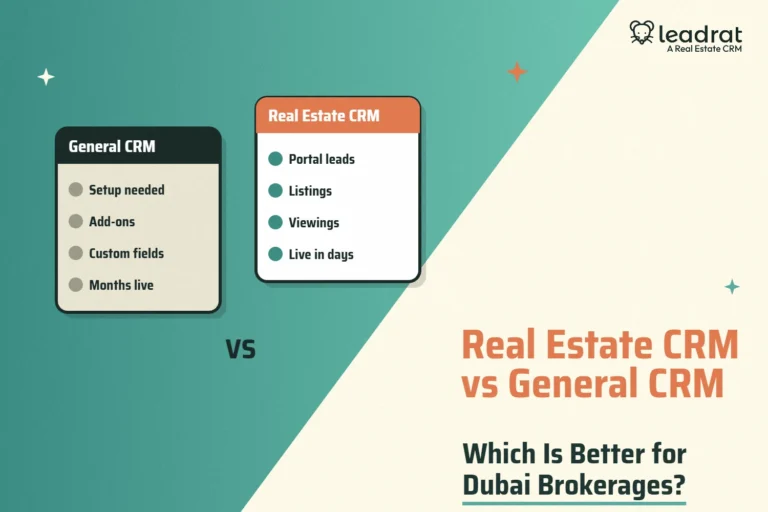
Traditional CRM suits a small generic business, but it is not ideal for real estate.

Importance of Next Generation CRM software in the real estate sector
Retention of clients is a critical task and is only possible through an advanced CRM.
Next-generation CRM for real estate creates a gateway to transform leads into customers and maintain long-term relationships.
Customer categorization and segmentation
- Next Generation real estate CRM helps in effectively categorizing leads and existing customers that allow employees to focus on preferences and work as per priorities. You can also run email campaigns from one central platform and target specific groups, which keeps your strategy focused.
Manage complex sales funnels
- A Typical real estate sales cycle is a lengthy one and involves several customer interactions and the exchange of information. So your team must track, study and make the most of every internal message and follow-up. It also forecasts the customer’s next move and helps plan the next action to convert each prospect. Such types of activities in a system are delicate and need special treatment. Next-Generation CRM helps achieve this.
Management of properties
- This is the most significant part while automating the complete sales process in the real estate segment. A cloud-based Next Generation CRM software can smoothly manage each property’s information, from address to the detailed information about floor plans, maps, pricing, status, etc.
Market Intelligence
- Next Generation real estate CRM software helps in progressing towards precisely meeting customer needs before offering any project with the features that provide real-time and updated information about locations, past communications, customer profile, cost, and availability. The company can also give user-based access, so the right team members see all information in real time.
Conclusion: The real estate sector is a world filled with millions of customers coming in and going out with the highest expectations, miscellaneous information, comprehensive research, and thousands of exterior random influences. Real estate professionals need to smartly communicate with diversified customers on their variety of requirements on a daily basis. Therefore, now is the right time to make next-generation CRM part of your core real estate process. It covers every detail and nurtures customer relationships for higher revenue.